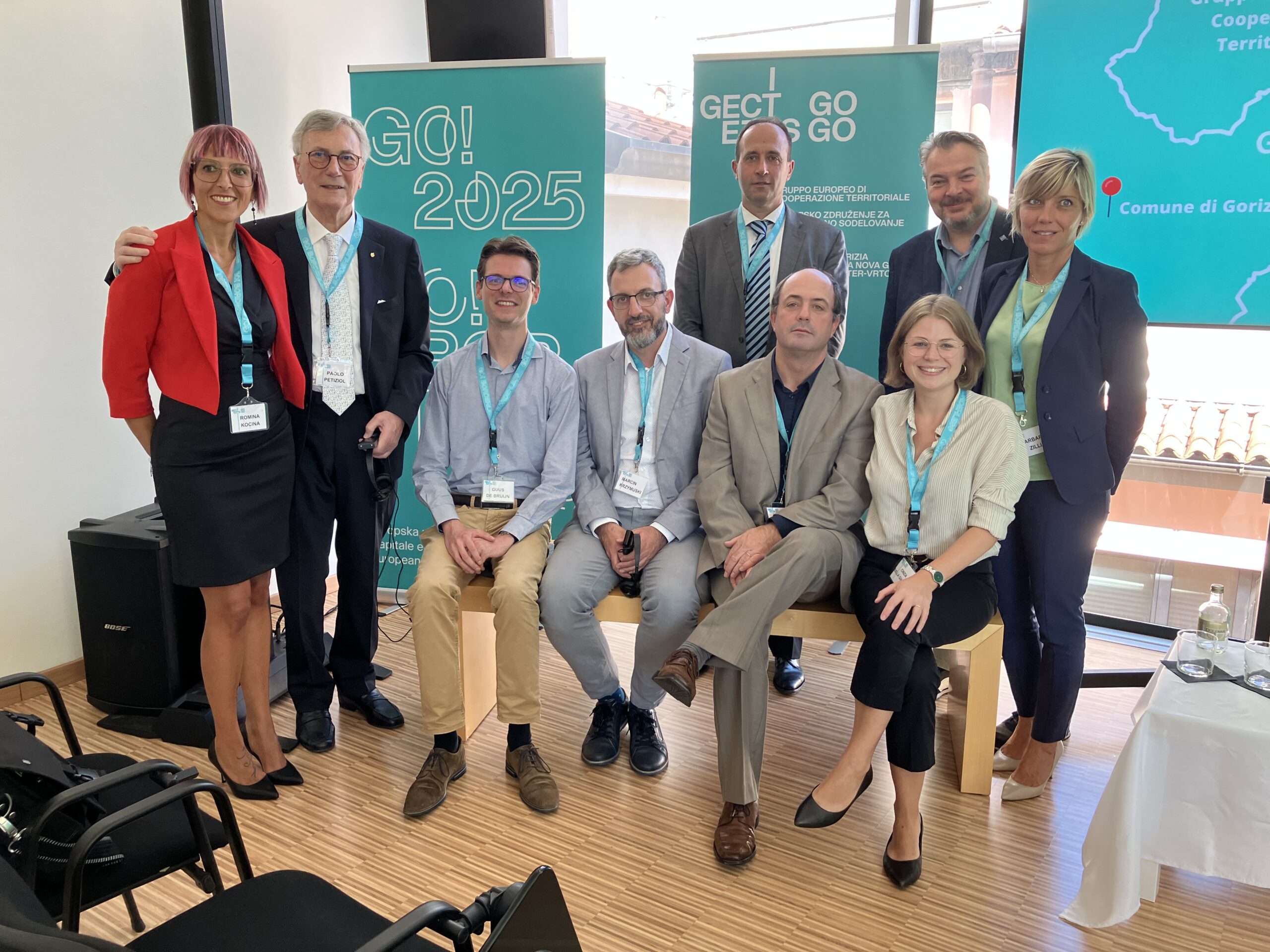
b-solutions support to EGTC GO’s conference
AEBR participated in the conference by the EGTC GO (IT/SI) organised with the support of b-solutions to raise awareness of local and regional politicians and administrations of the need to update the legal framework to enable effective cross-border cooperation.
The EU action b-solutions 2.0. Solving Cross-Border Obstacles, which AEBR manages on behalf of DG REGIO, offers additional support to b-solutions participants with the objective of promoting the solutions proposed by the experts in their reports.
The EGTC GO encompasses the municipalities of Gorizia (IT), Nova Gorica and Šempeter-Vrtojba (SI) and has taken part in b-solutions to solve the legal and administrative obstacles arising from the joint organisation of events on the cross-border square they share, Piazza Transalpina/Trg Evrope. With Gorizia and Nova Gorica having been jointly awarded the European Capital of Culture in 2025, the municipalities are now defining common spaces to be jointly used for this occasion and beyond.
Concerts and events will need to comply with two national sets of laws regarding the use of public spaces, their management, security laws as well as the regulation of events, including copyrights on music, waste collection, allocation of stands and stages, etc. These regulations “collide” in a number of cases and, therefore, both municipalities have already started looking at how to overcome this. Following the report by b-solutions expert Mitja Ozbič, the EGTC GO organised a conference entitled “GO! Borderless: addressing problems and finding solutions” on 27 September 2023 in Gorizia, with the support of AEBR and facilitated through b-solutions’ resources.
On this occasion, representatives of the EGTC and expert Mitja Ozbič shared the results of the undergoing analysis of the b-solutions case implemented by the EGTC GO for the cross-border square Piazza Transalpina/Trg Evrope with local administrations and regional politicians.
Representatives of European institutions as well as of other border territories were invited to bring their experiences and competences in creating new solutions for cross-border cooperation. Guus de Bruijn presented the supra-regional organisation of Benelux, Sónia Antunes shared the experience of the EGTC Rio Minho, Marcin Krzymuski illustrated two examples of sharing public services in the cross-border cities Frankfurt (Oder) and Słubice, while Ricardo Ferreira (European Commission) and Cinzia Dellagiacoma (AEBR) presented the b-solutions action, and MEP Sandro Gozi presented the BRIDGE EU proposal promoted by the European Parliament to support cross-border cooperation.
All speakers acknowledged the need to update the legal framework to allow local authorities and stakeholders like EGTCs to make use of their competences to manage cross-border territories in a meaningful way. “It is necessary to push Member States and the EU to create a new legal framework that enables actions that truly address local needs of integrated cross-border areas, and this is urgent and important”, concluded Paolo Petiziol, the President of EGTC GO.